October 7th, 2011 at 1:21 pm

Yes, this is really what it's like on Slovak roads!
Coming to Slovakia? Better yet, planning on hiring a rental car? If so, there are a few things you’ll need to know.
First of all, the whole continent of Europe drives on the right side of the road and Slovakia is no exception. Well, unless you include Malta, but that’s sort of an island so it doesn’t count!
The speed limit in the built-up areas of towns and villages differs from the rest of the European Union and is set at 60 km/h as the allowed maximum. Outside of the urbanized area, the speed limit is 90 km/h and on the highways it is 130 km/h. Drivers, who ignore these speed limits are invariably caught by radar traps and the fines are considerable.
Many private radio stations regularly draw attention to their listeners to the places where a closer attention is to be paid.
The highways and some express roads require the payment of toll. You have to buy and display a sticker or stamp, the price of which varies according to the weight of your vehicle. The stamps are either for the whole calendar year or for a period of 15 days. You can buy them on border crossings, gas stations or post offices. There are plenty of gas stations all around the country. The prices of petrol may vary slightly, but the quality of petrol is usually very high.
The use of the cell phone (mobile phone) while driving a car is forbidden. Unfortunately you will see that many people do not respect this rule. But do not expect to get away with it yourself.
The alcohol limit is 0.0, zero, nix! Period. This means you can’t even SIP a glass before getting behind the wheel. This isn’t like the more relaxed USA or Australia – you’ll get in serious trouble if you get caught driving with alcohol on your breath.
Currently Slovak parliament is even talking about instant 1-year prison sentences for those caught driving really drunk.
Like the Czech republic, you MUST have your headlights on ALL DAY and ALL NIGHT. As pointless as it may seem in broad daylight, the rules are the rules!
On the unlit country roads between villages, pay special attention to cyclists often wearing dark clothing and riding on either side of the road. The pedestrians have priority on zebra crossing and they usually use this right to the fullest extent, crossing the road without watching for approaching cars. They may be committing suicide, but you will be charged with manslaughter.
The traffic lights are there for a reasong and are, for the most part, fully respected. Some bored policemen watch for them and passing on the orange light they may stop you and engage in a short conversation.
Actually, the policemen can stop you at any time and any place for no particular reason. Remember to carry all documents, have the seat belt attached, don’t drive too fast, never drink before the trip, do not drive on the wrong side of the road and park your car only where parking is allowed.
Other drivers drive relatively safely and when they see you in a foreign car, they will usually prefer to keep a distance from you, especially in Bratislava. Many people from countryside say that drivers in Bratislava drive like mad. On the other hand, some drivers from small villages get confused in city traffic, so the Bratislavans prefer to give them plenty of room in order to prevent possible unpleasant situations.
You should also pay attention to some rare “brave” men in strong cars who think the road belongs to them. However, this phenomenon appears worldwide.
If you’re heading to Slovakia, check out http://news.tourslovakia.net/ for the latest places to see and things to do, and be sure to grab their handy MP3 tourist language pack. You’ll soon find out that while the trip to Slovakia is worth it, the locals don’t typically speak English.

Tags:
alcohol,
driving,
rules,
slovakia,
Tour
October 7th, 2011 at 12:52 pm

What if Steve Jobs had created the Tesla...
The EV world needs a Steve Jobs, who won’t rest until he’s created a vehicle that can jump-start a mass movement. We need a game changer. On October 4, Deloitte released a rather pessimistic survey, “Unplugged,” that reflected the thoughts of 13,000 consumers in 17 countries.
It’s a snapshot in time, but it revealed that people “expect electric vehicles to travel farther, require less charge time and retail for a lower price than automakers are offering.” Basically, consumers want the impossible.
Nonetheless, there is a lot of interest in EVs—54 percent of U.S. respondents in the Deloitte survey said they “might be willing to consider” buying or leasing an electric car. But they want more than the industry is currently capable of delivering—range above 300 miles, for example, no price premium and 30-minute recharge times.
But just because the auto industry can’t deliver now doesn’t mean it won’t tomorrow. Consider the field of online music before Steve Jobs, having just came back to Apple after his years in the wilderness, applied his intellect to building something great.
Napster had gone down in flames, and the clueless record companies’ own models for selling files were totally self-serving and unworkable. Songs would play twice and then self-destruct! It was Jobs who came up with the idea of the easy-to-understand 99-cent download, and then brought out what one author called “The Perfect Thing,” the iPod. Bingo, an instant industry worth many billions, the death of CDs, and Americans listening to music in a whole new way. No survey would have predicted it.
Consider the iPhone: Edmunds.com Senior Technology Editor Doug Newcomb carries this thought further. “Before the iPhone came out,” he told me, “people were thinking that cell phones were kind of a joke—nobody expected them to work all that well. Then Apple delivered this device that people lusted after, that because of exceptional design and functionality they had to have.”
What Jobs did, Newcomb points out, was not just meet people’s expectations—but exceed them. He wasn’t thinking about what people wanted, but about what they didn’t even know they wanted. Henry Ford famously said that if he hadn’t looked around the corner, the result would have been a faster horse instead of a car.
So where’s the Steve Jobs of EVs? I know who you’re thinking of, and I mostly agree. Elon Musk. The Tesla Roadster was an insanely great game changer, and Musk pushed every step of the way to deliver something that the market didn’t even know it wanted—a high-performance zero-emission electric car. No wonder it inspired Bob Lutz at GM to push for the Chevrolet Volt.
The only thing wrong with the Roadster is the $109,000 price of entry. Given the price of high-tech battery packs, it was never going to become a mass-market vehicle. The $57,400 Tesla Model S, recently shown off in Silicon Valley is closer, but if you want the 300-mile 84-kilowatt-hour batteries (and who won’t want range like that?) you’re looking at $80,000.
Tesla plans to build a mass-market EV for everybody, but it’s in line behind the Model X, a crossover SUV on the Model S platform. I don’t discount the possibility that Musk will be the guy who ultimately puts the EV in every driveway, but it’s also possible he’ll sell the company and find other worlds to conquer (he builds rockets, after all).
It won’t be easy to build a market-changing EV, and that’s why no one’s done it yet. Batteries are inherently expensive, and so is building a cutting-edge car from scratch. The Steve Jobs of electrification may be sweating it out in an engineering class right now, or maybe (like Jobs, Bill Gates and Mark Zuckerberg), he just dropped out of college because he can’t wait to get to work.
This could be where I deplore the state of science education in America, but instead I’m going to give props to GM and Ford for hiring a lot of young engineers. It was inspiring to learn that General Motors hired no less than 39 of the students competing in the federal EcoCar Challenge. Is one of those kids the next Steve Jobs? From the passion and creativity they exhibited converting their Saturn Vues to EVs, I’d say a definite maybe.
The electric car that changes everything is one that conventional wisdom says can’t be built now. It will have at least 200 miles of range, fast recharge times, and it will cost, at most, $25,000. To succeed, it needs throw-out-the-box design, totally cool functionality and an ultra-usable interface. It’s got to be better than any internal-combustion alternative. I think that car is just around the bend, and somewhere in the world a genius is playing around with a clean sheet of paper.
(Sourced from the very talented Jim Motavalli)
Tags:
car,
electric,
jobs,
steve,
Tesla
October 1st, 2011 at 11:01 am

Dude, stop crying and go convert an electric car.
Even if you hate the idea electric cars, you’d be a fool to think the world’s major economies can carry on as normal with the cost of oil going up. We must move away from oil as soon as possible, if not immediately.
Moving to electric cars is not about hugging trees either; we must move to an energy source that’s more freely available for both international security, and to avert another oil-based recession.
The year 2008 saw the oil-hungry American economy topple over like a stack of cards. The recession changed the economy of the country severely and left many people without jobs or a means to sustain their families. More houses were put on foreclosure than ever before, leaving an even larger number of families homeless and destitute with no one to bank on.
The initial suspicion was that the recession was sparked by the downfall of the financial services market and the housing market. More and more financial experts came forward with another, more accurate reason for the financial crash however which is now more widely accepted: an unprecedented oil price peak of $147 per barrel in 2008.
Oil just about touched that price again this year, though fortunately oil has plummeted back to $100 a barrel a week ago (though it hasn’t flowed through to the pumps in Europe yet). As for $200 a barrel oil? Yes, it will happen, that’s a certainty. But when?
Well, good news if you’ve just bought an SUV: it’s unlikely to happen within the next 6 months due to the second economic downturn. Though don’t click your heels yet. Lloyds of London estimated it’s probable by 2013, or even 2012.
Recent research by Fitch showed how it will affect the global economy when $200 a barrel oil does actually happen.
There’s a lot of evidence to support the theory we have already reached “Peak oil”, which means we simply cannot increase the supply any more, due to a lack of availability compared to the world’s viciously growing appetite for the stuff. This will have a flow-on effect to most countries.
Such a high price of oil will most likely drag many advanced economies back into recession. At the same time, inflation would rise, increasing pressures in already heated emerging markets. If this is true, then what’s happening to the USA and the Euro is the beginning of this process.
The media will get excited over stock markets crashing around the world, but the biggest problem will be the gradual slowed growth that occurs afterwards.
Companies will cut back on staff, banks will reduce lending, and consumers will stop buying products, which then means companies will have to reduce staff numbers again, and so on. As we know from 2008-2009, it’s not a pretty scenario, but it has the potential to be much worse this time if we don’t get off oil, and fast.
Professor Paul Stevens, from Chatham House says, “A supply crunch appears likely around 2013…given recent price experience, a spike in excess of $200 per barrel is not infeasible.”
So we know it will happen eventually, but what can we do? We have two years before this prediction of $200 a barrel oil hits us (even if it doesn’t reach $200 a barrel, oil will certainly be higher than it is now due to supply & demand).
We can only hope governments can implement electric car schemes as soon as possible, before gas hits $10 per gallon at the pumps. And I won’t dwell on the fact that in Northern Europe it already has…
In short, go convert a car to electric. It’s a third of the cost of buying a new factory-built electric car, and you can start it tonight. Oh, and buy my conversion tutorial while you’re at it (shameless plug).
Tags:
2012,
2013,
lloyds,
oil,
prediction,
price
September 30th, 2011 at 2:06 am

Electric cars offer many solutions to our problems - but not at this price.
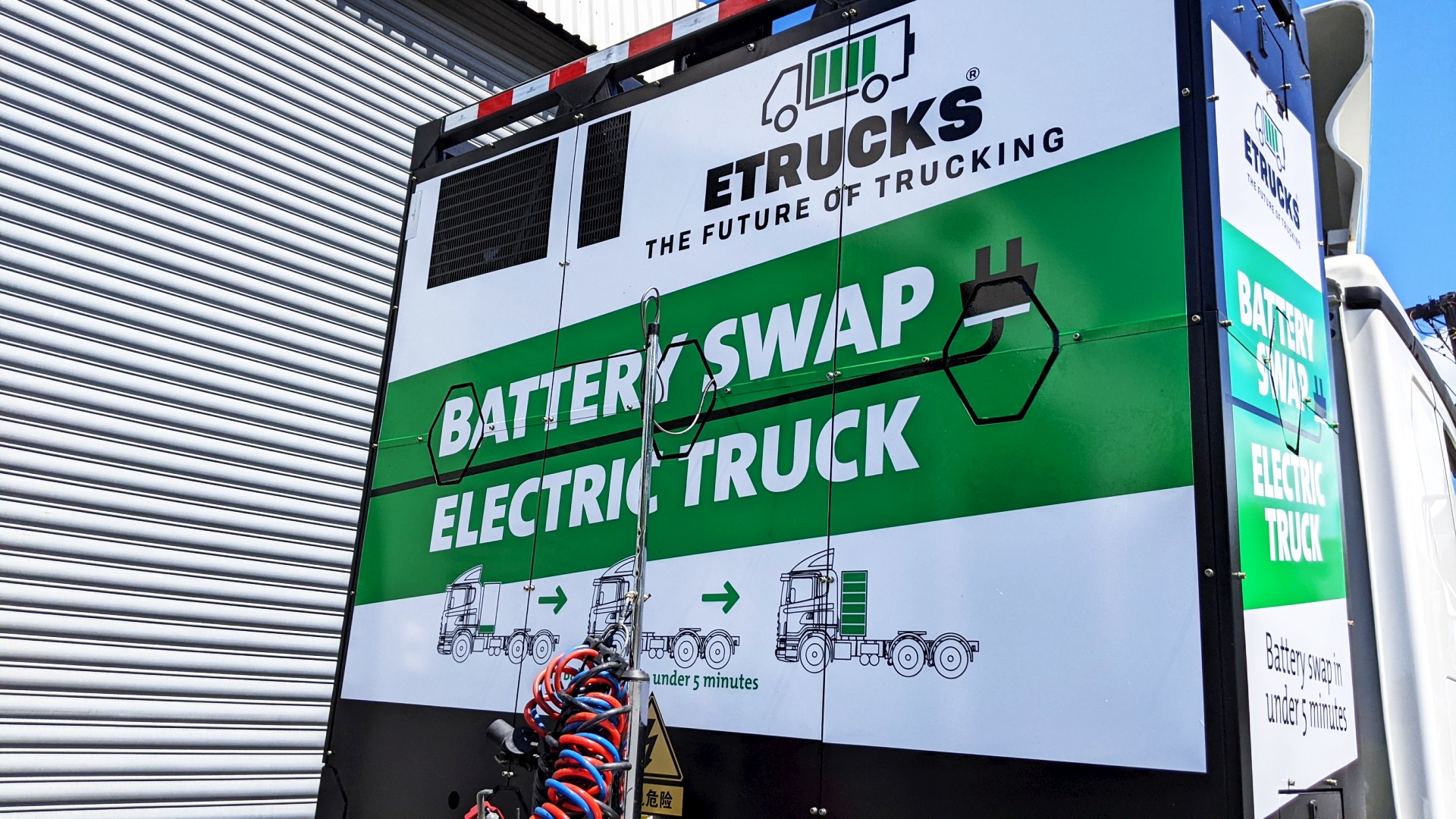
I had always expected battery swapping to be expensive, but Better Place announced yesterday that renting a swappable battery pack will cost you $4200 USD per year in expenses.
I’m yet to be convinced that Better Place’s business can work. The convenience of battery swapping is a great idea, however fast charges are getting ever shorter. Nissan’s next generation of LEAF with Toshiba SCiB batteries can fast charge in just 15 minutes – at a cost of around two US dollars of electricity – with no battery pack leasing costs.
If you just need a quick top up, say, only 30 miles, then a fast charger can deliver this in around 5 minutes. That’s the time it takes to use the bathroom, check the emails, or call someone (if you’re a man – a female phone conversation would offer enough time for 2 full fast charges in my experience!).
Annoyingly (and obviously) we must remember that Better Place customers can only buy an electric car that takes their single-sized, swappable battery pack. Even with the Renault Fluence selling at a heavily reduced cost of about $20,000 USD, a Nissan Leaf would end up a more cost effective purchase in the USA, when you factor in two years of Better Place battery renting.
Shai Agassi is a very charismatic seller of his product. When a reporter asked him, “Have you been surprised by how long it’s taking electric vehicles such as the Nissan LEAF and Chevy Volt to roll out in the United States?”, he answered with:
“We didn’t have different expectations. The first flight after the Wright Brothers took off in the air, for about 10 feet, wasn’t to the moon. You don’t jump up, and say, “We can get airborne, so let’s go to the moon.” What you do is slowly move up, gradually.”
He has a point, and that’s exactly what Nissan, GM, and Mitsubishi are doing, with the opening of new mass-production plants in the USA planned for next year. This will allow more competition, more supply, and more demand.
Which again makes me wonder if Better Place is destined to succeed. Personally, I don’t want to be tied to one company at a price I have no control of – this is why I want an electric car in the first place, to be free from the dreadfully high price of oil. But there could still be a market for fleets who are in range of a battery swapping station.
In my own case, I no longer want a dictator demanding – and receiving – whatever price he desires for his product, just so I can get to work and back each day. In the past it’s always been oil sheikhs who set these prices, but soon it could be “Battery sheikhs”.
Mr Agassi was also asked about competing technologies to his product, such as fast-charging electric cars, and how many quick charging stations could be installed for the price of one Better Place battery-swapping station.
He responded by suggesting they weren’t his competition, saying, “If I’m driving a car that requires a half-hour stop on the side of the road, fast charge, that’s also not competition for a three-minute switch. One is a car, and the other one is a vehicle.”
Personally I feel that fast-charging electric cars are very much his competition and he should acknowledge them as such.
For example, Better Place’s battery packs can take the Renault Fluence 100 miles with a 3 minute battery swap at the end. But, if an electric car such as the LEAF or Tesla Model S could gulp down that same 100 miles in 15 minutes, he should be very concerned. Mostly, because those cars have no ongoing battery leasing fees either.
Perhaps in a PR move, Mr Agassi considers labels oil as his real competition, stating that a three-minute fill-up is what people expect at any gas station across the country. He obviously hasn’t had to wait in line at a busy New Zealand gas station for 15 minutes like I have often had to.
He concludes with, “Now, if somebody thinks they can do better than that, with any technology, they’re my friend. Because they also end oil.” to which the skeptic in me wonders why then, he’s priced the battery swapping batteries at the same price as filling up a gas powered car.
Bottom line: for many of us considering the benefits of an electric car, the ongoing costs are just too high.
There are some heroic eco-warriors out there who would love to spend this money for the “Green cred” that comes with it, but for the rest of us we want electric cars because they give us the freedom we’re used to, without the many costs of burning oil – at a price that rivals walking.
Tags:
battery,
better,
car,
electric,
place,
price,
swapping
September 29th, 2011 at 7:33 am

Obama meets his match: Ilham Anas, from Indonesia
I thought I’d taking a break from my usual tech-related topics today and have a bit of fun, with a collection of some seriously convincing look-alikes I’ve stumbled across today. If nothing else, consider this a mental holiday for a few minutes before getting back to your daily tasks.

Which one's real? Being fascinated by the Royals, I know - but do you?

Hmmm. If I hadn't seen the real Arnie on the Right...

George Clooney is on the right - this one's not so hard.

Now it's getting spooky. This looks a lot like Jennifer Aniston.

Katherine Heigl - or not?
Ok, I’ve saved the best for last. This guy is so close to the real deal it’s unnerving:

Wow. Once again, if you hadn't noticed the real one, would you have known?
Ok, now get back to whatever you were doing. Normal blogs resume tomorrow.
Tags:
alikes,
celebrity,
fun,
look,
Reality